
Communication
Effective, inclusive communication enables ākonga who are blind, deafblind or have low vision, to connect, learn, and thrive, valuing cultures, languages, accessible formats, empathy, adaptability, and respect across a range of contexts.
Description/Purpose
Effective communication is essential for ākonga who are blind, deafblind, or have low vision, as it lays the foundation for social connectedness, self-awareness, and the ability to learn and thrive. It involves a range of strategies and skills, including active listening, adaptability, and empathy, which grow and change throughout life. Inclusive communication celebrates and acknowledges blind, low vision, and deafblind culture and identity, and values Te Reo Māori and New Zealand Sign Language (NZSL). Accessible formats like Braille, audible, large print, and tactile enhance communication. Respect and openness build trust, fostering honest communication across various social and cultural settings.
What ākonga will understand, know and do across their learning pathways
Understand – Big Ideas
As ākonga develop their communication capabilities and knowledge, they come to understand that:
- Engaging and participating in everyday life and everyday settings involves effective communication skills and strategies that reflect their individual strengths and communication preferences.
- Effective communication celebrates and acknowledges blind, low vision and deafblind culture and identity, and values Te Reo Māori and New Zealand Sign Language (NZSL). Experiences in a range of environments build awareness and develop ako.
- Communication skills and strategies will grow and change as new situations are experienced, relationships are built, and learning continues.
- Communication skills build in complexity over time and are essential for relationships and learning. Skills and strategies for effective communication develop in various ways.
- Through effective communication, self-awareness and shared understandings, ākonga develop an appreciation for the views of others.
- Communication involves a range of skills including active listening, adaptability, and empathy. These skills help to build trusting relationships and a deeper sense of self-awareness.
Know – Content and Concepts
As ākonga develop communication capabilities and knowledge, they come to know that:
- Communication occurs in a variety of ways.
- Inclusive communication may be verbal and non-verbal. Communication may include facial expressions, body movement, gestures, signs, talking, listening, reading, and writing.
- Accessible communication for blind, deafblind and low vision communities includes a wide range of formats.
- Braille, audible, large print, and tactile formats provide greater access to information, increasing participation in learning and life.
- Communication is reciprocal.
- Communication involves sharing information, ideas, and feelings with others. Respect and openness to each other’s ideas and feelings build trust and encourage honest communication.
- Communication will change in different situations.
- Communication will vary depending on social and cultural settings, and audience. Different approaches and skills are needed to understand others and be understood.
Do – Practices
As ākonga develop communication capabilities and knowledge they will be able to:
- Develop skills and strategies to use the right tool/s for the task so they can access information and learning through a range of formats.
- Collaborate with peers, teachers, and staff, ask for support and accept appropriate assistance.
- Use Braille, sign, speech, and body language to communicate thoughts and ideas with others.
- Develop active listening skills to access information and learning and to be able to understand and respond.
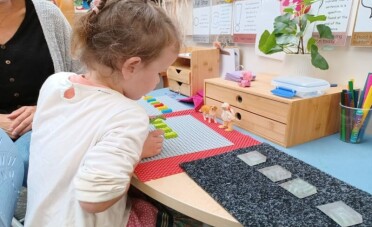
Ākonga who learn through touch develop tactile skills to better understand their environments. For some ākonga, tactile discrimination skills lead to a literacy pathway which may include Braille.
Teaching Guidance
BLENNZ teachers will have the knowledge and skills to:
- Assess and identify the most appropriate learning media for the specific needs of ākonga.
- Support literacy development of BLENNZ ākonga.
- Teach literacy through tactual modes including Braille.
- Facilitate creation of the learning environment to best support individual learning.
- Support assessment and provision of appropriate technology and/or resources to support the development of communication skills.